
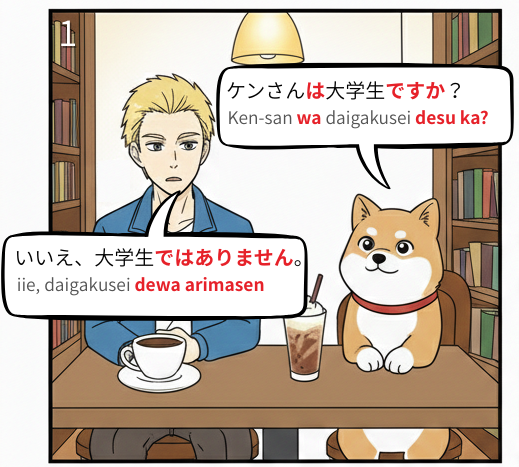
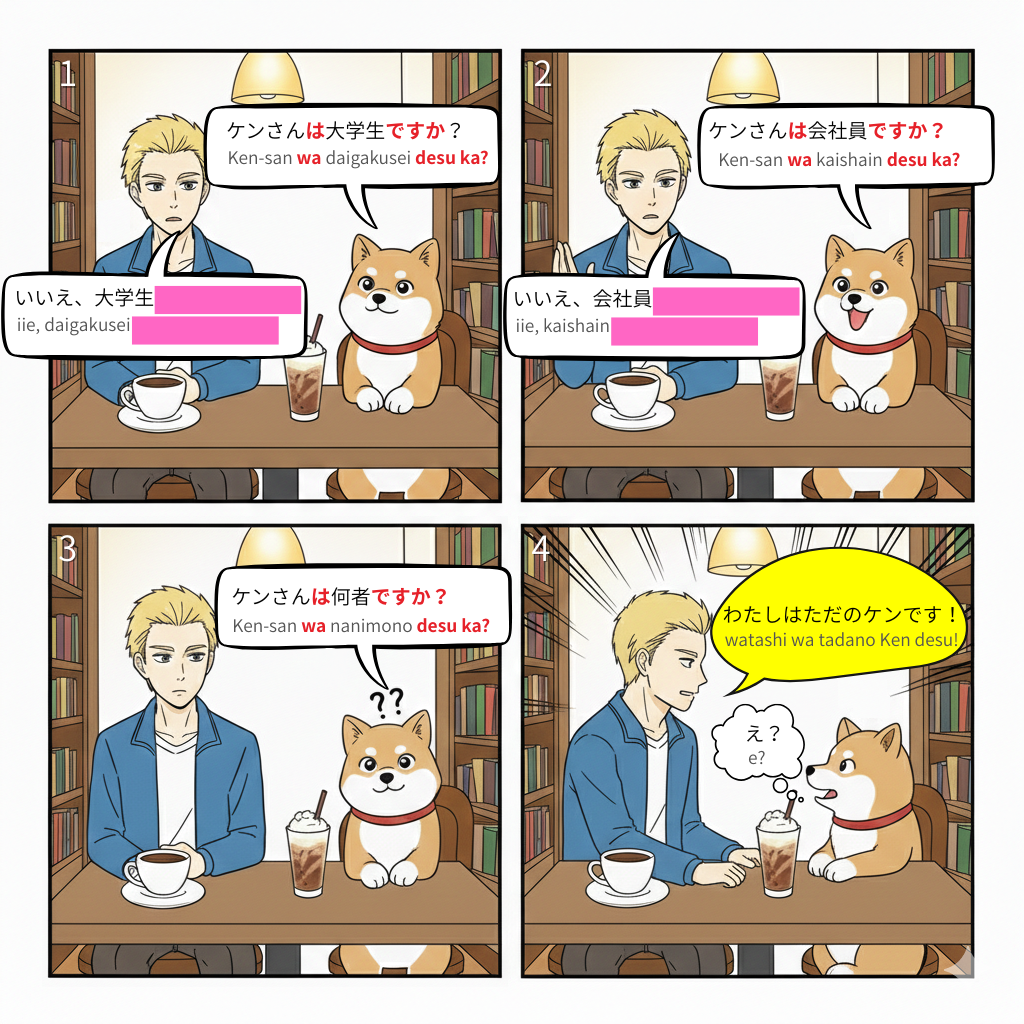
 Shiba: Mr. Ken, are you a university student? / Ken: No, I am not a university student.
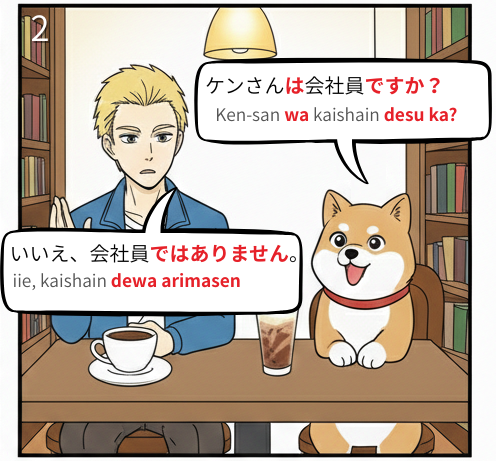 Shiba: Mr. Ken, are you an office worker? / Ken: No, I am not an office worker.
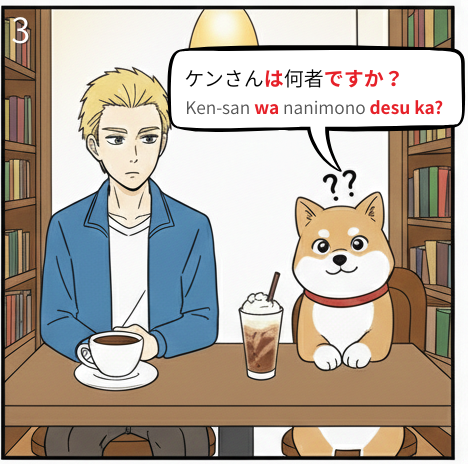 Shiba: Then… who are you, Mr. Ken?
 Ken: I’m just Ken! / Shiba: Wait, what?
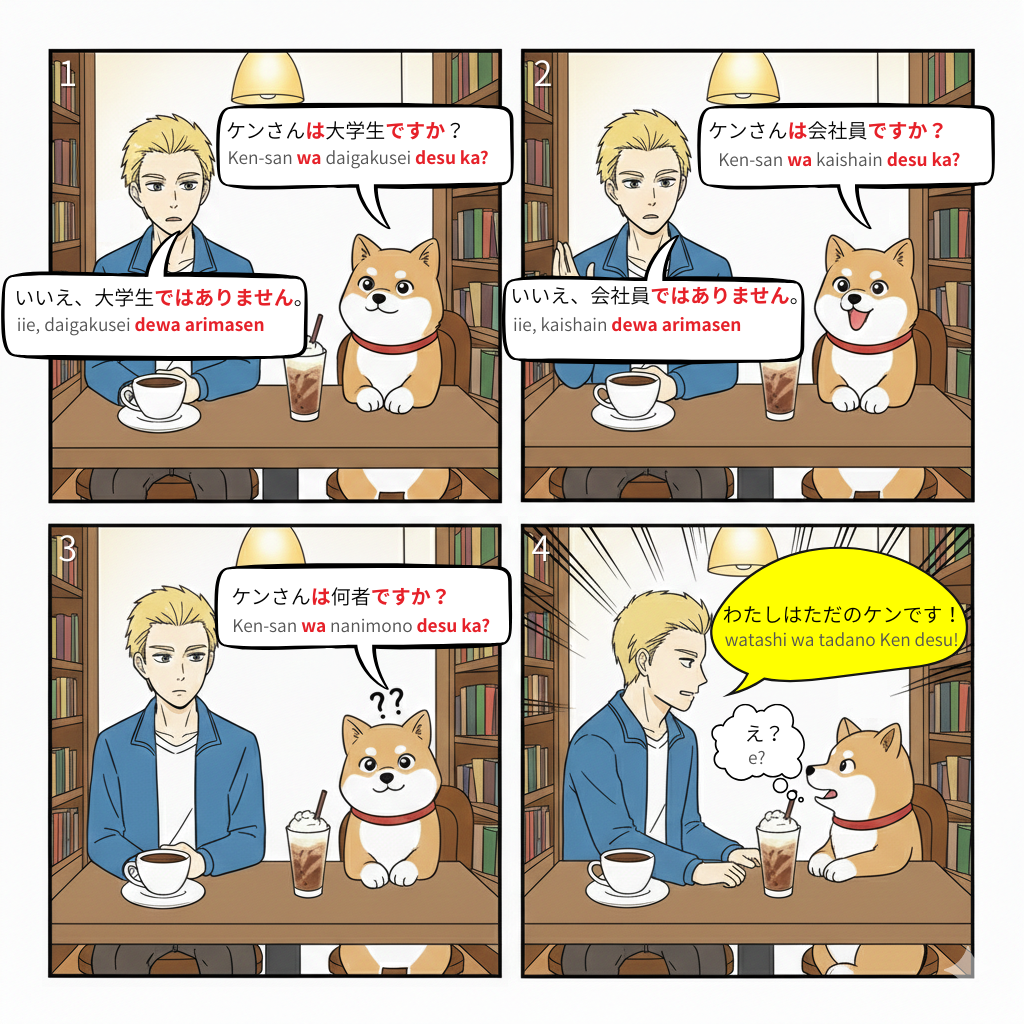
- Shiba: Mr. Ken, are you a university student? / Ken: No, I am not a university student.
- Shiba: Mr. Ken, are you an office worker? / Ken: No, I am not an office worker.
- Shiba: Then… who are you, Mr. Ken?
- Ken: I’m just Ken! / Shiba: Wait, what?

Did you catch the story? Let’s check the magic words to understand it better! 🐾

Let’s review the phrases we found in the story!
Japanese questions are super easy! All you have to do is add “ka” to the end of the sentence.
It marks the subject. Think of it as “As for…”
The polite ending of the sentence.
Just add it to the end to make a question!

Wow, that’s even simpler than in English! So, how do we make a sentence negative?

You can make a sentence negative by changing “desu” to “dewa arimasen.” It’s a bit long, but you’ll just have to memorize this part!
It marks the subject. Think of it as “As for…”
The polite negative ending of the sentence.

I’ll do my best! By the way, in the manga above, it said “daigakusei de wa arimasen,” and the subject “watashi wa” was missing. Why is that?
Actually, in Japanese, the subject is more often omitted than not. It’s a culture where we expect the listener to “sense” who the subject is, almost like a ninja!
- Hide: If the listener already knows who you’re talking about.
- Show: Only if it’s unclear or you want to emphasize it.
In Japanese language schools and textbooks, the subject is usually not omitted to prevent students from getting confused.
In my lessons, too, we’ll keep the subjects most of the time to help you master the grammar properly!
In the next manga, let’s fill in the pink blanks and read it out loud!
If I remember correctly, I just need to add “ka” to “desu” to make a question, right?
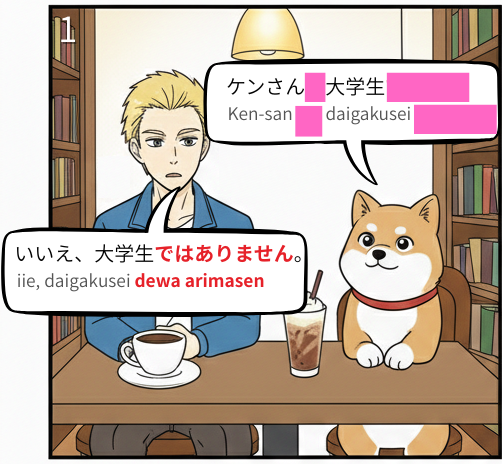
Shiba: Mr. Ken, are you a university student? / Ken: No, I am not a university student.
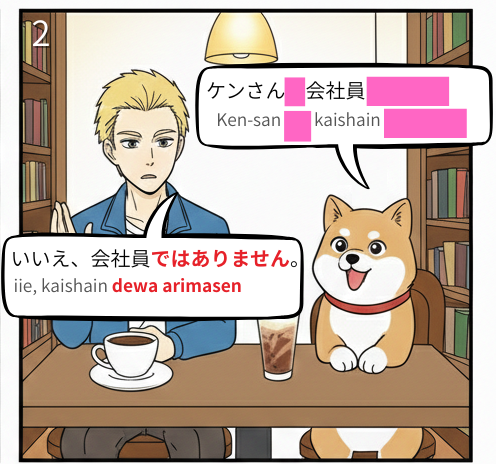
Shiba: Mr. Ken, are you an office worker? / Ken: No, I am not an office worker.
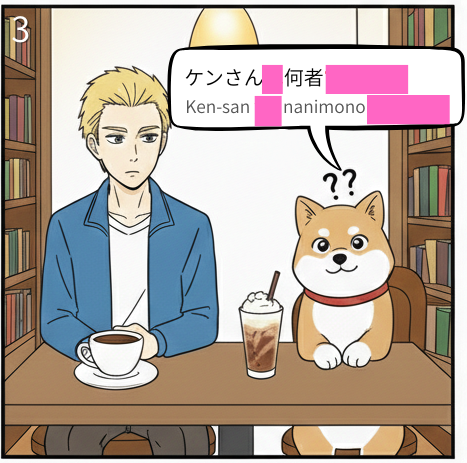
Shiba: Then… who are you, Mr. Ken?
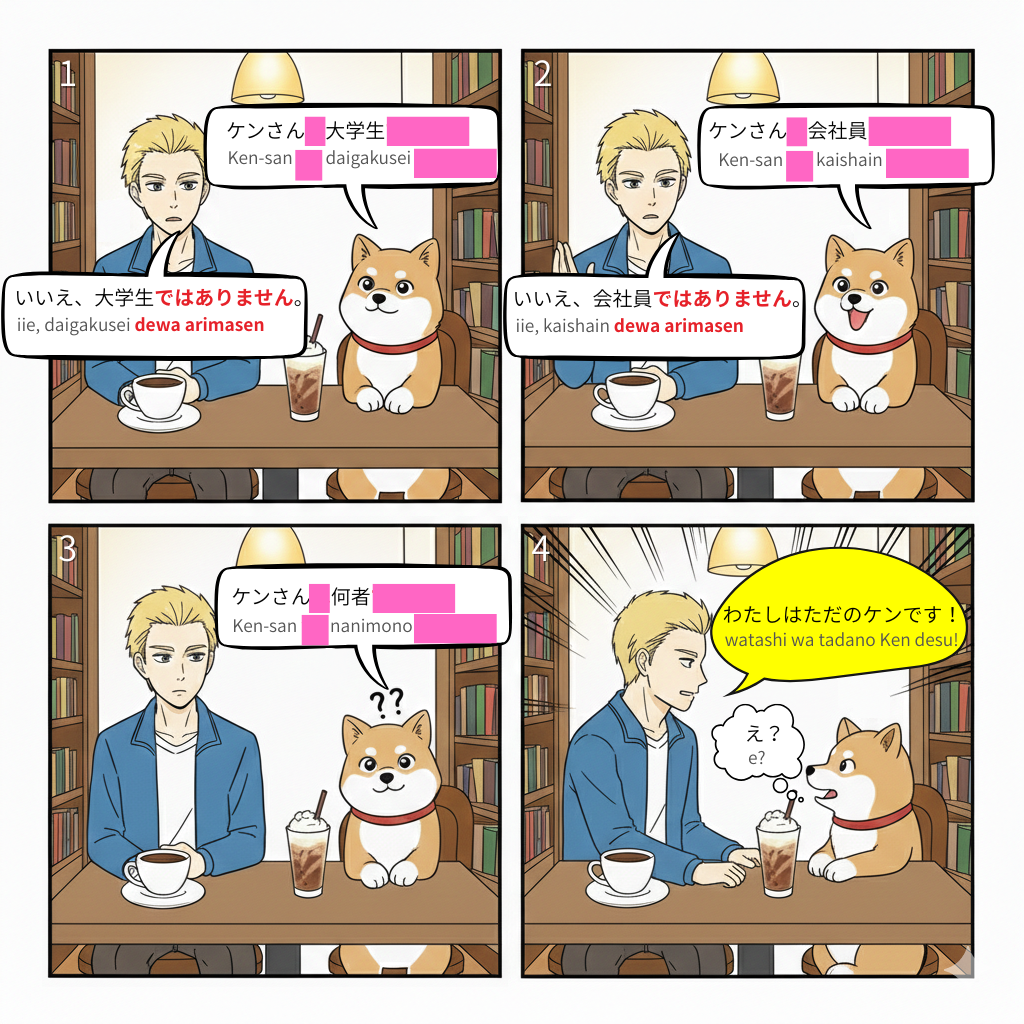
Now, let’s try to fill in the pink blanks for the negative sentences too!
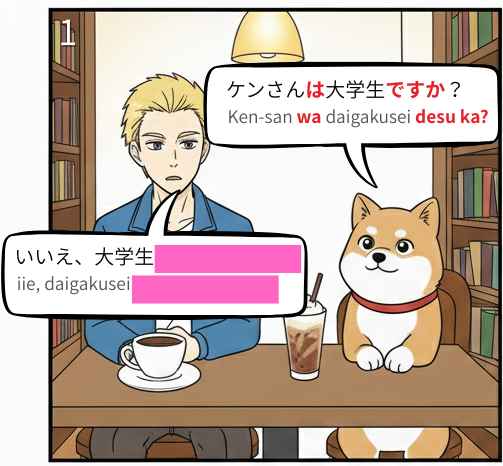
Shiba: Mr. Ken, are you a university student? / Ken: No, I am not a university student.
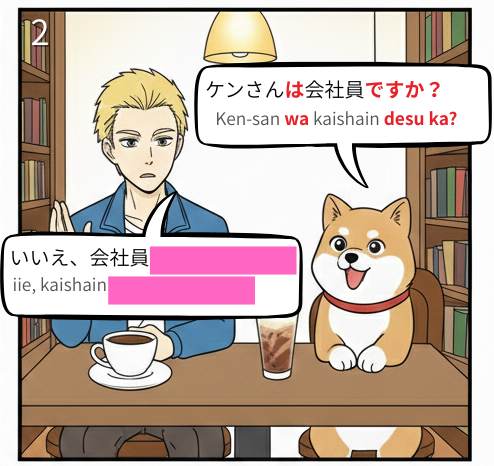
Shiba: Mr. Ken, are you an office worker? / Ken: No, I am not an office worker.


I think I’m getting the hang of the ‘wa…desu’ structure! I want to try a quiz!
If you’re not yet used to Japanese characters, try turning Romaji ON.
I want to review the vocabulary too!
Can you find all the correct pairs?
Congratulations! You’ve mastered the core of Japanese grammar: “A wa B desu.”
Now you can introduce yourself, your job, and your nationality. You’ve taken a huge first step!
PREMIUM MEMBERS
Your Homework & Personal Feedback:
In Lesson 5, you’ll have your first big Writing Assignment! Send us your Japanese sentences, and Shiba will provide personal corrections and tips just like this:
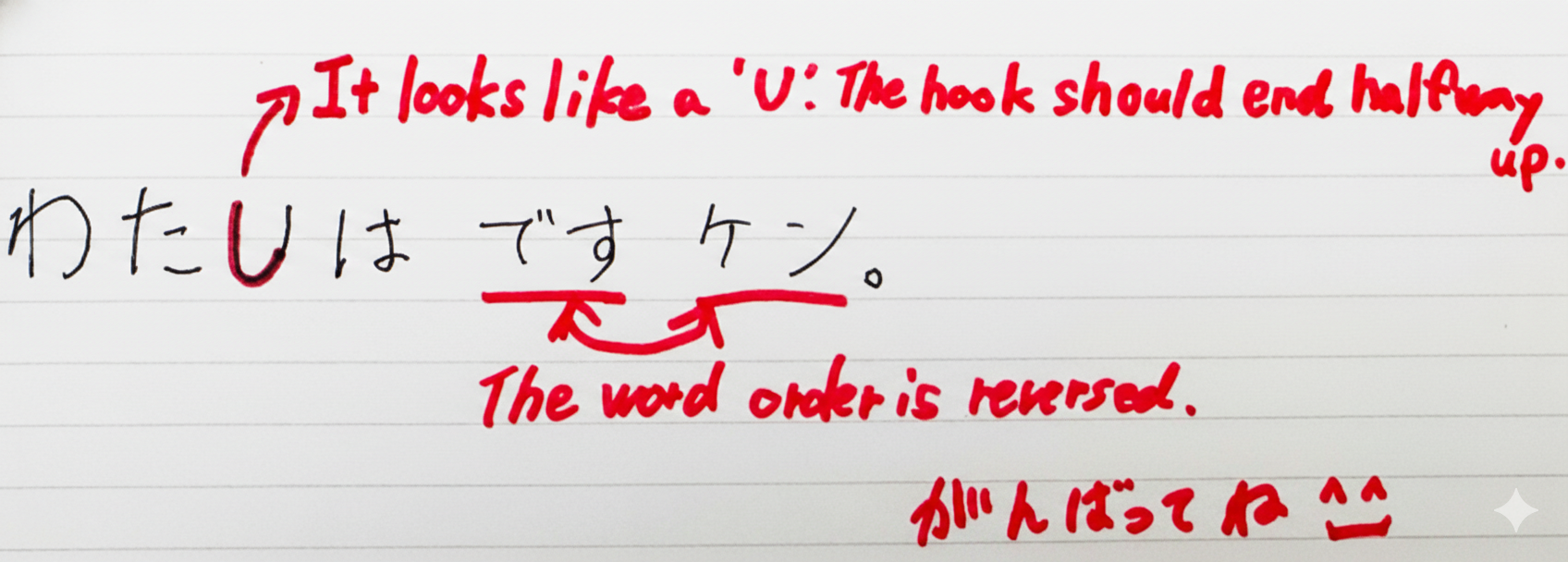
Make sure to complete Lessons 2 to 4 first to sharpen your skills for the assignment! 🐕✨
Curious about the finer details?